
VPN Attacks Types [And How To Protect Yourself]


 5 min. read
  Updated on
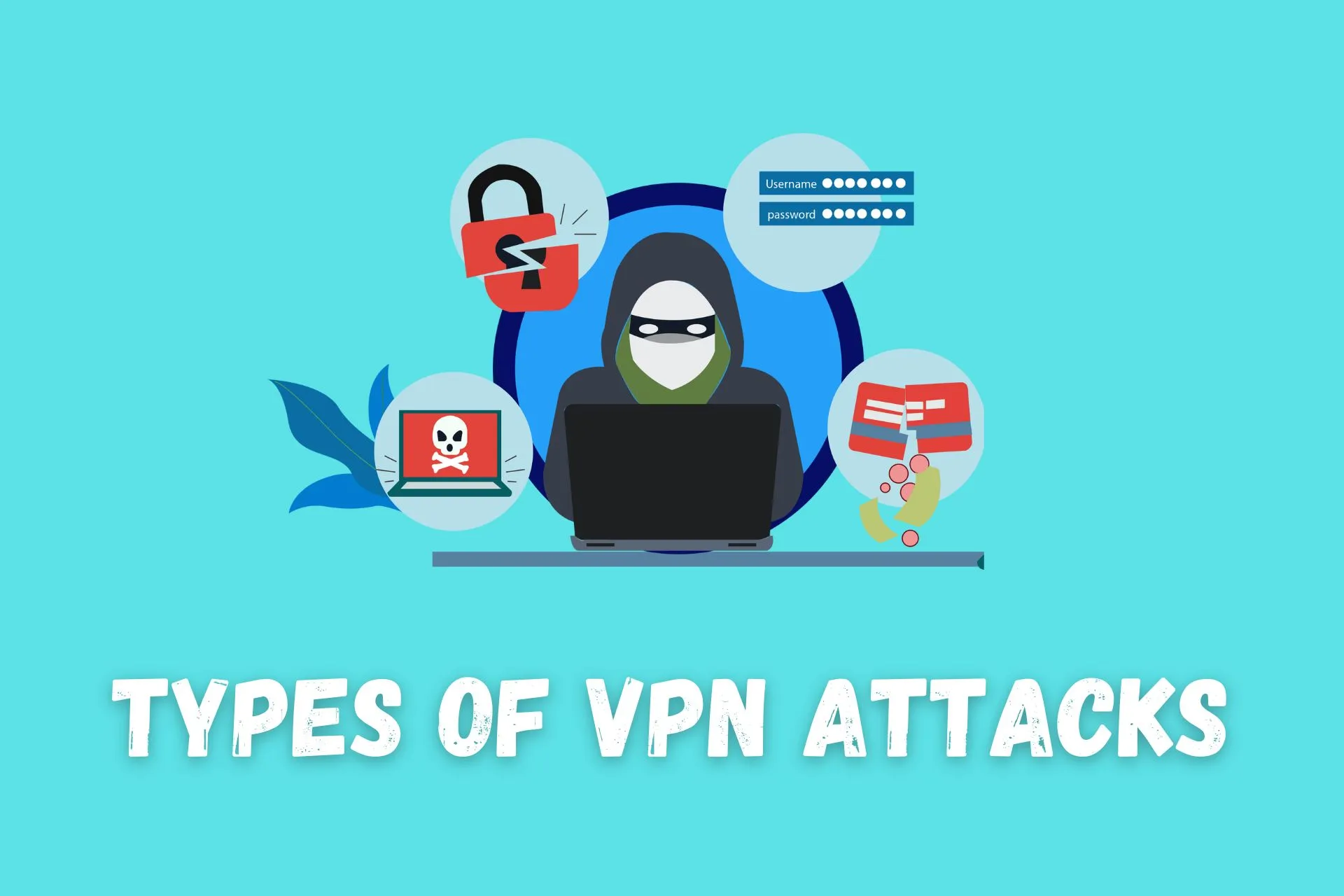
VPN services have been instrumental in increasing the cybersecurity of individuals and businesses. Even hackers rely on them to safeguard their sensitive information.
These tools can shield you from a host of cyber attacks. They may also have built-in malware blockers, driving you away from sites that may infect your device. Some of them can alert you about data breaches too.
That said, VPNs aren’t bulletproof against cyber attacks and could be used against you. VPN breaches are well documented; one high-profile case saw the US Department of Homeland Security (along with dozens of US and European entities) falling victim to Pulse Secure VPN hackers.
So, how exactly can cybercriminals use your VPN against you? Read on to learn about the most common VPN attacks, how hackers execute them, and how to combat them.
VPN attack types – explained
There are two types of hackers: ethical (white hat) and malicious (black hat).
The former are a force for good. They attack VPNs to identify vulnerabilities developers should patch. Whereas the latter exploit security flaws to steal data for money or other nefarious objectives.
Cybercriminals don’t discriminate. They would attack their targets whether or not they have layers of security. Often, VPNs just happen to be in the way.
When they have to deal with a VPN, black hat hackers might try to capitalize on its limitations. Or they would try to use it to intrude into their target’s network, which is what happened with Avast.
To do this, they might:
- Wait for an IP, DNS, or WebRTC leak – Protected devices could inadvertently broadcast their real IP addresses and/or DNS queries due to your VPN’s moments of weakness or your non-VPN apps like web browsers.
- Exploit an unsafe tunneling protocol – Some common VPN protocols are inherently a security risk. A good case in point is PPTP, which is incredibly vulnerable to man-in-the-middle attacks where the hacker intercepts data while in transit. Another potentially unsafe protocol is L2TP/IPSec, which might be in control of the National Security Agency.
Now, let’s dive deeper into how hackers attack VPNs:
Break the encryption
Cybercriminals could carry out cryptographic attacks to turn the data scrambled by the VPN into plain text. They would guess the encryption key by brute force, which is an extremely time-consuming process of trial and error.
Steal encryption keys
Considering brute force attacks require a ton of resources, most hackers would simply focus on infecting their target’s device with malware to covertly obtain the key needed to decrypt scrambled data.
Compromise a VPN server
A threat actor that could remotely access VPN hardware would be able to wreak havoc on networks the same way Cring ransomware attackers capitalized on a Fortigate VPN server vulnerability.
Likewise, this could be the reason why user records associated with SuperVPN, ChatVPN, and GeckoVPN wound up on the black market.
Snatch VPN username and password
Through phishing or other forms of social engineering, the hacker can trick the target VPN user into sharing login credentials and pass the software’s authentication process without arousing suspicion.
How to detect and prevent VPN attacks
Sensing, let alone stopping, VPN attacks can be difficult. To help you wise up, do the following:
Avoid unsafe VPNs
Steering clear of free VPN software with questionable logging practices and insecure protocols can reduce your risk of getting hacked. Use VPNs with strong security features. Check out our VPNs that prevent DDOS attacks rundown for some reliable suggestions.
Small companies in particular should look at the best VPNs for your small business to ensure they pick services with strong security features and business-grade protections.
Keep login credentials strong
Using password generators and managers is a simple, yet effective way to render keylogging and password-spraying attacks less successful.
Adopt MFA and SSO
MFA (multi-factor authentication) serves as your second line of defense in case your login details get compromised. It creates an additional authentication step, making the lives of hackers much harder.
For enterprises that want to go cloud, enforcing SSO (single sign-on) helps secure access to data and protect the identity of users in all digital environments.
Configure WiFi networks properly
The default settings of wireless routers usually don’t offer maximum security. So, basic understanding of the WPA2 security protocol goes a long way.
Maximize VPN security features
The most reputable VPNs are armed with a bunch of functionalities for neutralizing cyber threats at no extra cost. As long as such features don’t interfere with your device’s primary antivirus, they can help you catch malicious characters red-handed.
Use strict traffic filters
Limiting the IPs, protocols, and ports to VPN devices makes it easier to manage connections. If you don’t have solid IP filters, using firewalls to bust unwanted IPSec traffic will do.
Review connections routinely
Strange VPN session duration, connections from unknown devices, and uncharacteristic bandwidth usage are some of the unusual activities you should watch out for.
Keep VPN software updated
Downloading the latest app version promptly is the way to make sure your VPN is free of bugs and has the latest threat definitions.
Patch your devices
Your network is only as strong as its weakest VPN-protected device. So, it’s a must to discover and address the vulnerabilities of programs stored in your electronics as soon as possible. This way, you won’t give hackers any window of opportunity to exploit them.
Types of VPN Attacks – Summary
Using a VPN is a definite cybersecurity booster, but it doesn’t make you immune to hacking. The fact that these tools are hackable is an inconvenient truth.
Nevertheless, you can keep in step with threat actors when you’re familiar with all the known VPN attacks and types of methods they use. And if you take our advice seriously, you may be able to ward them off successfully.


Read our disclosure page to find out how can you help VPNCentral sustain the editorial team Read more


Improve this guide


User forum
0 messages